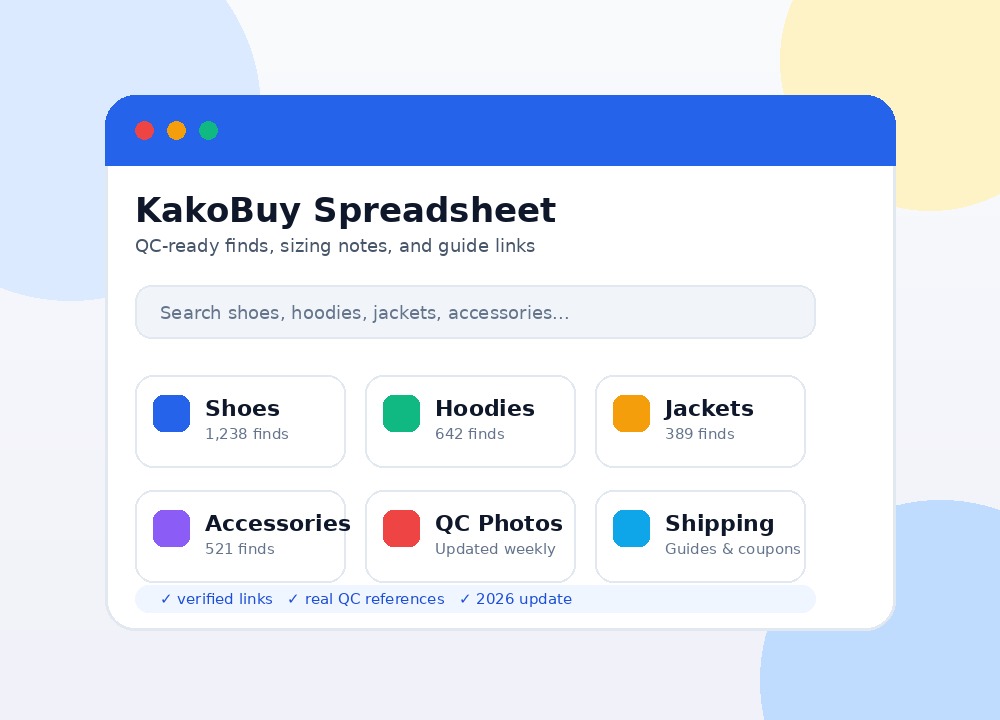
Our KakoBuy shoes category covers sneakers, boots, slides, and dress shoes — each entry verified with QC references and sizing notes so you know exactly what you are getting.
Shoes are the most popular category in any KakoBuy spreadsheet — and also the easiest to get wrong. Sizing, batch consistency, materials, and QC habits all vary wildly between sellers and even between different colorways from the same factory. This guide covers everything you need to know before you paste that first Weidian link into KakoBuy.
The shoe section of the KakoBuy spreadsheet spans a wide range of footwear types. Sneakers dominate — Jordan retros, Dunks, Air Force 1s, Yeezys, New Balance, and Asics are the most common. But we also track boots (Chelsea, combat, hiking), slides and sandals, dress shoes, and specialty footwear like football cleats and basketball performance shoes. Each sub-category has its own QC checklist because what matters for a Jordan 1 (swoosh shape, hourglass, toebox holes) is completely different from what matters for a pair of loafers (leather grain, stitching density, sole attachment).
Shoe sizing on KakoBuy is the #1 source of returns and disappointment. Asian shoe sizing does not map 1:1 to US or EU sizes. Even when a listing says "US 10," the actual insole measurement can be off by 0.5-1 cm. The only reliable method: measure the insole of a shoe you already own that fits well, in centimeters, and compare it to the seller's size chart. Never go by the label alone. Our KakoBuy spreadsheet includes insole measurement references wherever available, so you can cross-check before ordering.
The most expensive mistake is ordering without QC references. A listing photo is not what you receive — it is a marketing image, often lightly edited. Always compare your QC photos against independent QC references from community posts (Reddit KakoBuy threads are excellent for this). The second mistake is ignoring batch dates. A seller's "2024 batch" of a popular model might be excellent, but their "2026 batch" could have changed factories. Always check recent reviews dated within the last 3 months. Third: shipping shoes with boxes when you don't need them. Removing the box cuts volumetric weight significantly and can save 20-40% on shipping.
KakoBuy can order any size the seller offers, typically EU 36-47. However, the agent does not convert sizes — you must check the seller's size chart and compare it to your own measurements. Many sellers provide insole length in cm, which is the most reliable metric.
Shipping without the box reduces weight and volume, saving money. However, shoes shipped without boxes have a slightly higher risk of deformation during transit. If the shoes are expensive or you care about the box for collection purposes, ship with the box and request reinforcement (bubble wrap + corner protectors).
Most experienced buyers recommend 2-3 pairs max per parcel to avoid customs scrutiny. Shipping 4+ pairs in one box increases the risk of inspection and potential seizure, especially for branded footwear. Split large shoe hauls across multiple shipments.
